
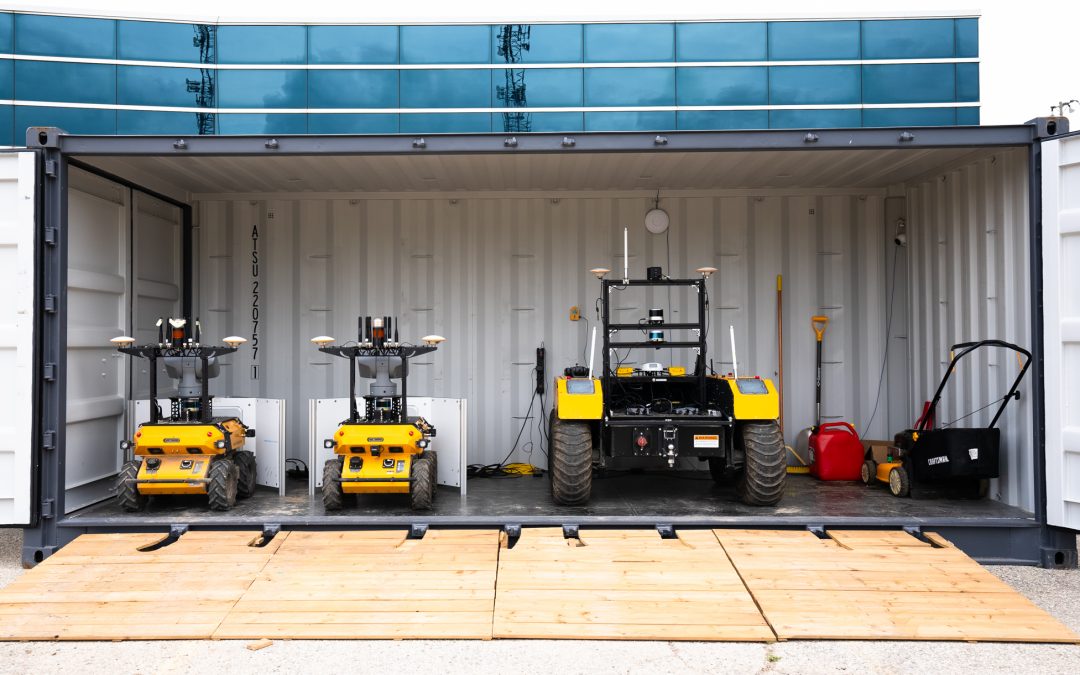
Choosing the right robotics platform can be the difference between a smooth deployment and months of rework. With so many variables to consider — operating environment, vehicle size, payload capacity, maximum speed, endurance, and integration requirements — it’s not always obvious which platform is the best fit for your project.
In this guide, we will highlight the basic parameters you should consider when starting out your platform selection process and overviewing our robotics platforms to help you make a confident and informed decision. You’ll find clear comparisons across key specifications, examples of where each platform excels, and use cases that show how real customers are putting them to work today. Whether you’re operating indoors or outdoors, navigating tight spaces or carrying heavy payloads, building a research prototype or scaling a commercial solution, there’s a platform designed to meet your needs.
Beyond the hardware, you’re not on your own. Our engineering team works closely with customers to guide platform selection and tailor systems to specific applications. From integrating third-party sensors and computing modules to performance upgrades and custom modifications, we help ensure the platform you choose is optimized for your goals.
Let’s explore the options and find the robotics platform that’s right for your project.
Beginner Considerations
Working Environment
The first step in narrowing down which Clearpath robotic platform is best for you is knowing whether you will be working in an indoor or outdoor environment. For an indoor lab or facility, you’ll probably be looking at Ridgeback, Dingo, or Jackal. For rugged outdoor settings like forests and industrial areas, you would want Warthog, Husky, or Jackal. For entry level robotics in a classroom, TurtleBot 4 is your best choice.
Robot Functionality
Next, consider what functionality your robot will need to complete the work at hand. What size of platform is appropriate for your use case or setting? What is your speed, weight, and payload capacity expectations? Other factors could be IP rating, handling slopes, and various platform specific capabilities. Review the specs overview table below to get an idea of what to expect from each robot and check out the product webpage that suits your needs best for more details.
Project Requirements
Finally, to further refine your platform decision making process, consider what your project requirements are in terms of scope. Are you collecting data? Surveying and mapping? Handling items with a manipulator? Asking questions like these help you know what third party sensors and payloads you may need our custom integration team to add onto your robot with expert consideration to computing power, breakouts, ROS support, and more.
Platform Specs Overview
The chart below provides a side-by-side comparison of our robotic platforms, highlighting weight, maximum payload, top speed, and run time, to help you quickly identify the best fit for your project. Lighter platforms with lower payload capacities and longer run times are often ideal for indoor environments, where maneuverability, safety, and extended operation are key. Heavier platforms, on the other hand, typically support higher payloads and faster speeds, making them better suited for outdoor or industrial use cases that demand robustness and performance over varied terrain. This table is the easiest way to compare the core specifications of all our robotic platforms, seeing how each robot balances mobility, endurance, and carrying capacity for informed decision making. Some upgrade options, such as battery power, are also available, so be sure to ask our Sales team if that applies to your project!
| Platform | Weight | Max Payload | Max Speed | Run Time | Terrain |
| Warthog | 280 kg (551 lbs) | 272 kg (600 lbs) | 18 km/h (11 mph) | Up to 6 hours
|
Outdoor |
| Husky | 80 kg (175 lbs)
|
100 kg (220 lbs) | 2.0 m/s (4.5 mph) | 4 – 12 hours
|
Outdoor/Indoor |
| Jackal | 17 kg (37 lbs) | 20 kg (44 lbs) | 2.0 m/s (4.5 mph)
|
2 – 8 hours | Outdoor/Indoor |
| Ridgeback | 135 kg (276 lbs) | 100 kg (220 lbs) | 1.1 m/s (2.4 mph) | Up to 15 hours
|
Indoor |
| Dingo | 9.1 kg (20 lbs) | 20 kg (44 lbs) | 1.3 m/s (2.9 mph) | Up to 11 hours
|
Indoor |
| *TurtleBot 4 (standard) | 3.9 kg (8.6 lbs) | 9 kg (19 .8 lbs) | 0.31 m/s (0.69 mph) | 2.5 – 4 hours
|
Indoor |
*Educational platform, Lite model also available
Platform Use Case Examples
Let’s take a closer look at each robotic platform, with a brief overview of each of their capabilities along with real customer examples of how they have been used in past projects. You’ll find links to related blog posts and videos that showcase a range of applications — from research and prototyping to inspection, autonomy, and sensor-rich deployments — giving you practical insight into what’s possible with each platform. Highlighting proven use cases and diverse sensor integrations helps bring each robot’s potential to life, showing how it can support your specific project while inspiring you to plan and build your own unique solution.
Warthog
Warthog is our largest outdoor platform, about the size of a golf cart (minus the roof). With articulating suspension and heavy-duty traction tires, it’s perfect for your biggest projects, especially if it comes across brief periods of driving in water. It has ample space for integrating any necessary sensors and payloads to take on your most labour intensive tasks, i.e. lifting solar panels in place for installation.
Husky
Husky is our flagship outdoor platform, with a medium form factor. It is ready to tackle any research or industrial site adventure with customizable drive trains, integrated sensors and payloads, and even the AMP (autonomous mobile platform) package for out-of-the-box functionality. It is much more portable than a Warthog as two people can safely lift it into most vehicles.
Jackal
The first word that comes to mind to describe Jackal is zippy. It is our most versatile robotic platform as it is great in both outdoor and indoor environments. With its small form factor, it is even more portable than Husky as one person could reasonably carry it. Whether you need to get into tight spaces like mine shafts, surveying around an industrial building, or conducting autonomous navigation research, Jackal will be your new best friend.
Dingo
Dingo is a lightweight, compact indoor mobile robot designed for robotics research and education. Available in two drive systems, differential and omnidirectional, with expandable power and computing options, Dingo is ideal for a wide range of robotic applications including autonomous navigation, mobile manipulation, and mapping.
TurtleBot 4
TurtleBot 4 is our most simple and accessible robot designed specifically as an open-source education and research platform in indoor classroom settings. For context, it’s literally built on a Rumba vacuum base. This robot comes in Standard and Lite models, providing all the base sensors and hardware needed to introduce you to the world of autonomous robotics.
Custom Integration Services
Off-the-shelf robot platforms, while versatile, often fall short of meeting the unique demands of diverse research and development applications — that’s where Clearpath steps in. We go beyond standard offerings to deliver systems tailored precisely to your use case, advising on the right hardware and software, and delivering a fully integrated, ready-to-deploy solution.
To support rapid development and long-term flexibility, our platforms can seamlessly integrate a wide range of third-party components, including:
- LiDARs (Ouster, Velodyne, Hesai)
- Cameras (stereo, RGB-D, thermal, and machine vision from vendors like FLIR, and Intel RealSense)
- Manipulator arms and end effectors (Universal Robots, Kinova, and Franka)
- Other sensors (IMUs, GPS/RTK, force-torque sensors, ultrasonic sensors, and radars)
The result is a reliable, fully integrated robotic system that saves you time and development cost, while preserving the flexibility to iterate and evolve as your project grows. Check out the Clearpath Store to see the available sensors for integration and individual purchase.
Depending on your project and workspace needs, you can also consider customizing the robot drivetrain with castors for two-wheel drive, mecanum wheels for omnidirectional movement, or tracks for snowy all terrain adventures! We also offer OutdoorNAV outdoor autonomy software to fast-track your autonomous vehicle development with remote navigation and real-time commands.
Let’s Get Started
As you can see, choosing the right robot isn’t about picking the most powerful platform on paper; it’s about finding the best fit for your goals, environment, and long-term vision. By starting with the fundamentals, comparing the core specs of our platforms, and exploring real customer stories, you’ve seen how each robot shines in different applications. From research and inspection to logistics and autonomy, the true potential of a platform comes to life when it’s matched thoughtfully to the problem it’s meant to solve.
And you don’t have to make that decision alone. Our custom integration team is here to help you think beyond the base platform — advising on third-party sensors, payloads, and system integrations that transform a robot into a complete solution. Whether you’re just getting started or scaling an ambitious deployment, let’s start the conversation and build the robot that brings your vision to life!